
Heritage you can wear, labelled for today.
A textile family can carry decades of trust into a new label, if the pack and the page do not hide it.
- 2 brands on our roster
- 2 case studies
- How we approach it
Fashion brands get judged on the hangtag before the fabric.
A customer meets a label in three places before she touches the cloth: a feed, a retailer rack and a courier box. If those three disagree, the quality of the weave never gets a chance to speak.
Textile families face a quieter problem. Generations of wholesale trust sit behind a name that has never had to introduce itself to a shopper. The brief often says modern and young. The better answer is usually to keep the lineage and let the system around it feel current.
What Fashion & textile brands usually get wrong.
These are patterns in the category, not a verdict on any one company. Each one is fixable, and most are cheaper to fix early.
Hiding the lineage
Founders worry that an old name looks dated and rebuild it as a start-up. The shopper loses the one thing a new label cannot buy, which is proof that the family has been trusted for decades.
A logo with no pack behind it
A mark drawn on a screen can fail on a hangtag, on tissue paper or on a dispatch box. Without a packaging system, each print job invents its own version of the brand.
Catalogue photography that only works in print
Images shot for a line sheet often look flat as a phone swatch. Colour and texture read differently at 200 pixels, so they have to be planned for.
Forgetting the retailer
A label sold through stores needs hangtags, display collateral and a simple way for a retailer to place an order. If those arrive late, the first season starts late.
Launching content with no plan
A first collection with a feed that goes quiet after week two looks unsure. A launch plan sets the first weeks of content before the first parcel ships.
How we approach Fashion & textile.
Treat the lineage as an asset
We start from what the family or the founder has already earned. The mark and the voice are drawn to carry it forward, not to disguise it as a start-up.
Design the unboxing and the retail kit together
Tissue, hangtag, dispatch box and retailer collateral are one system. A wholesale network can move on schedule only when those pieces exist on day one.
Photograph for both rooms
Catalogue photography has to work on a retailer's line sheet and as a swatch on a phone. We direct it with both in mind, so the content engine has material from the first week.
What good looks like.
Five markers we hold Fashion & textile work to, whoever does it.
A mark that carries history without costume
It feels established and current, with no heritage clichés.
Packaging that reads as a system
Tissue, tag and box clearly belong together, and the retailer pieces match.
Photography with a point of view
Fabric, fit and detail are shown honestly, in a consistent light.
A launch calendar
The first weeks of content and the retailer drop dates are planned together.
Wholesale-ready on day one
Line sheets, hangtags and dispatch materials exist before the first order is placed.
Selected work in Fashion & textile.
2 brands, in good company.
The Fashion & textile brands on our roster. Select any brand to see where we worked with it.
Explore all clientshas a published case study
How the five services apply in Fashion & textile.
Most engagements start with one discipline and add another when it earns its place. Here is what each one means in this sector.
Branding & Identity
Identity and packaging for a label are designed together, from the monogram to the dispatch box, so every touchpoint carries the same argument.
Creative & Content
Campaign and catalogue content share one art direction. The launch content calendar is built from the same shoot.
Website & UI/UX
A storefront or catalogue site shows colour and texture truthfully, loads quickly on a mid-range phone and makes the retailer enquiry obvious.
Performance Marketing
Search and paid social wait until the system and the photography exist. Then spend goes to the products and the audiences that are already responding.
PR & Growth
A heritage story is a press story. Founder voices and the first collection are placed with fashion and business media that reach both shoppers and retailers.
See how a project runs, from first conversation to shipping, or get a sense of cost first. Read the guide for this sector. Based in Rajasthan? We also work with local businesses in person, in Jaipur.
Before you hire an agency for Fashion & textile.
Questions worth asking any studio, including us.
- Ask who will design the packaging system, and how many components they have handled in one project.
- Ask how the identity will be tested on a hangtag, a dispatch box and a phone thumbnail before it is final.
- Ask what is included for retailers: tags, line sheets and display pieces.
- Ask who directs the photography and who owns the images afterwards.
- Ask for a launch plan with dates, not only a creative deck.
- Ask how heritage and a new audience will be balanced, and who decides when they disagree.
Fabric and origin claims such as handmade, pure, organic or sustainable need to be true and provable. Labelling and advertising rules change. Check the current requirements and have claims reviewed before they appear on packs or in campaigns.
Asked often in this sector.
Something we haven’t covered? Ask us.
What makes branding for Fashion & Textile different?
A textile family can carry decades of trust into a new label, if the pack and the page do not hide it.
What do you design for Fashion & Textile brands?
Treat the lineage as an asset. We start from what the family or the founder has already earned. The mark and the voice are drawn to carry it forward, not to disguise it as a start-up. Design the unboxing and the retail kit together. Tissue, hangtag, dispatch box and retailer collateral are one system. A wholesale network can move on schedule only when those pieces exist on day one. Photograph for both rooms. Catalogue photography has to work on a retailer's line sheet and as a swatch on a phone. We direct it with both in mind, so the content engine has material from the first week.
Which Fashion & Textile brands have you worked with?
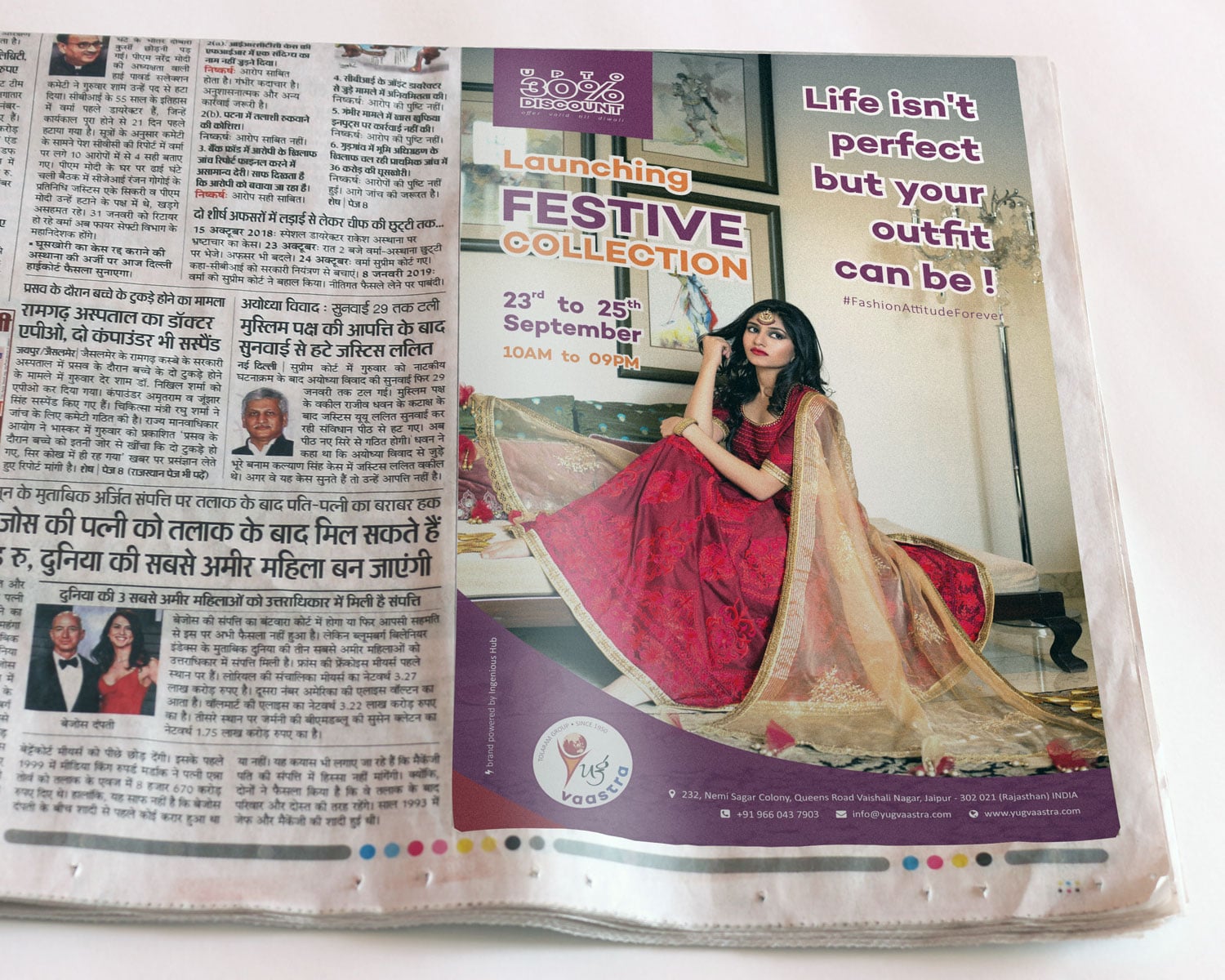
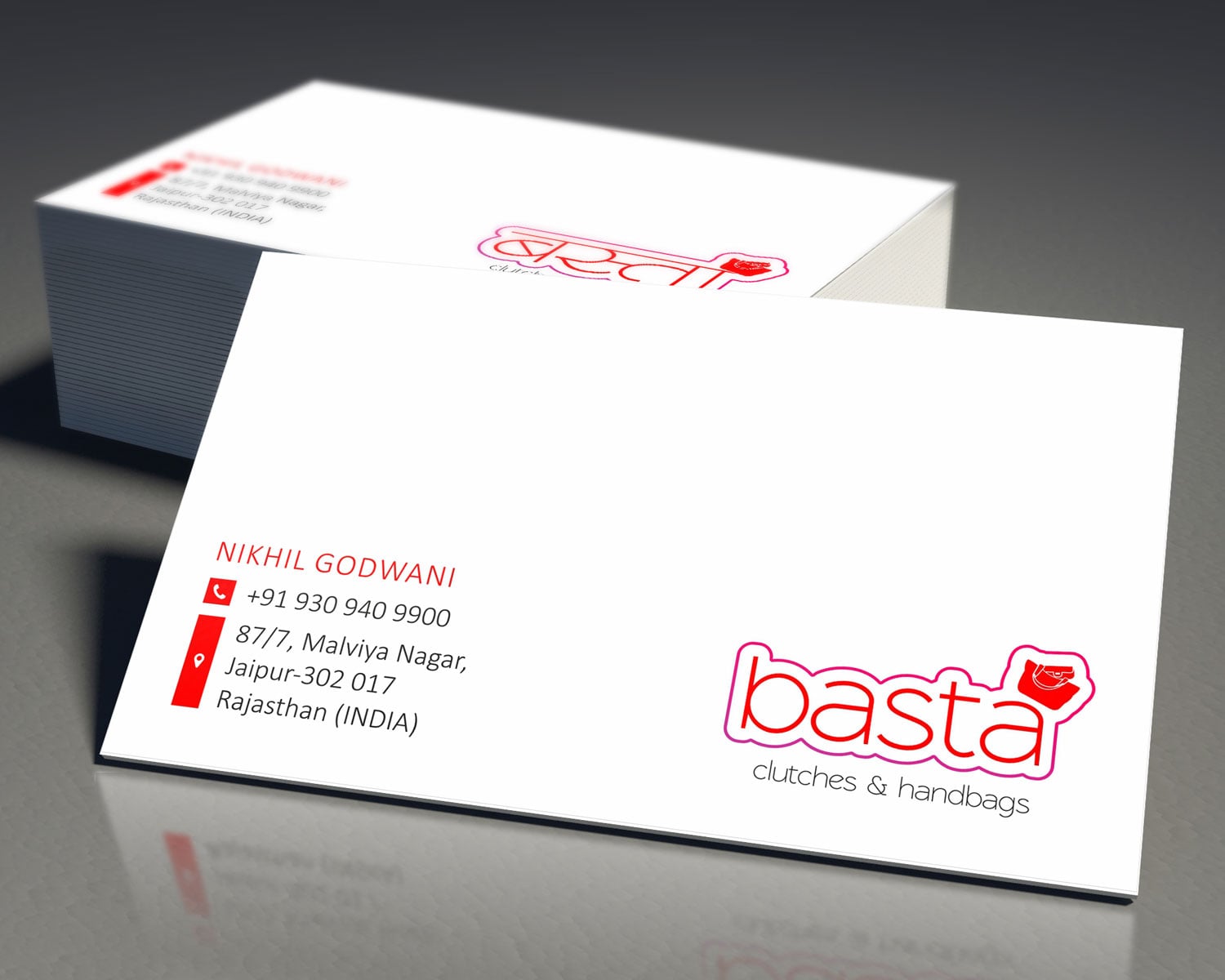
We have worked with 2 brands in this category; the projects with full case studies are Yug Vaastra, Basta. The full list is on the clients page.
Who checks claims and compliance in Fashion & Textile work?
Claims need an owner. We ask you to confirm every claim before it publishes and recommend that your own adviser review anything regulated. Fabric and origin claims such as handmade, pure, organic or sustainable need to be true and provable. Labelling and advertising rules change. Check the current requirements and have claims reviewed before they appear on packs or in campaigns.
Do you work with Fashion & Textile brands outside Jaipur?
The studio is in Jaipur. The work runs over calls and email, with WhatsApp for the quick questions, and we have clients across India and beyond.
What should I prepare before the first call?
Send whatever you have. Current materials help, and so does knowing who you sell to and what has and has not worked. A rough budget band is useful too. Rough is fine; the first conversation is for sorting out the rest.
How do I start?
Send a brief on the contact page, or ask for the free brand audit, a short written review with three prioritised fixes.
Building in Fashion & textile? Let’s talk.
Send the brief you have, even rough. We’ll tell you plainly how we’d approach it and what we’d do first, within four working hours.
or write to hello@ingenioushub.com. We reply within four working hours.
See what Branding & Identity starts atFree brand audit
Last reviewed